How Grocery Stores Ruined Olive Oil for You (And You Probably Don't Even Know It)
There's a whole generation of American home cooks who think they don't like olive oil or at least do not know what it actually tastes like. They think it's the greasy stuff you pour in the pan before the garlic. They think it tastes like nothing, or like a faint memory of nothing. They've never tasted the lightly spicy kick of fresh olive oil, never smelled fresh-cut grass or green tomato coming off a spoon, and never understood why anyone in Italy would drink the stuff at a mill in November like it's the first wine of the year. That's not your fault. It's what happens when the only olive oil you've ever tasted came off a supermarket shelf in a clear plastic bottle for eight dollars.
We want to be precise about the accusation here, because it matters. The problem isn't that grocery stores are selling you fake oil. Most of the time, what's in the bottle really is olive oil, and it really is legal. The problem is that the industrial commodity model behind that eight-dollar bottle has quietly redefined what "olive oil" tastes like for millions of people, and what it redefined it to is nothing. Flat, odorless, faintly waxy nothing. Here's how that happened, and how to spot it from the aisle.
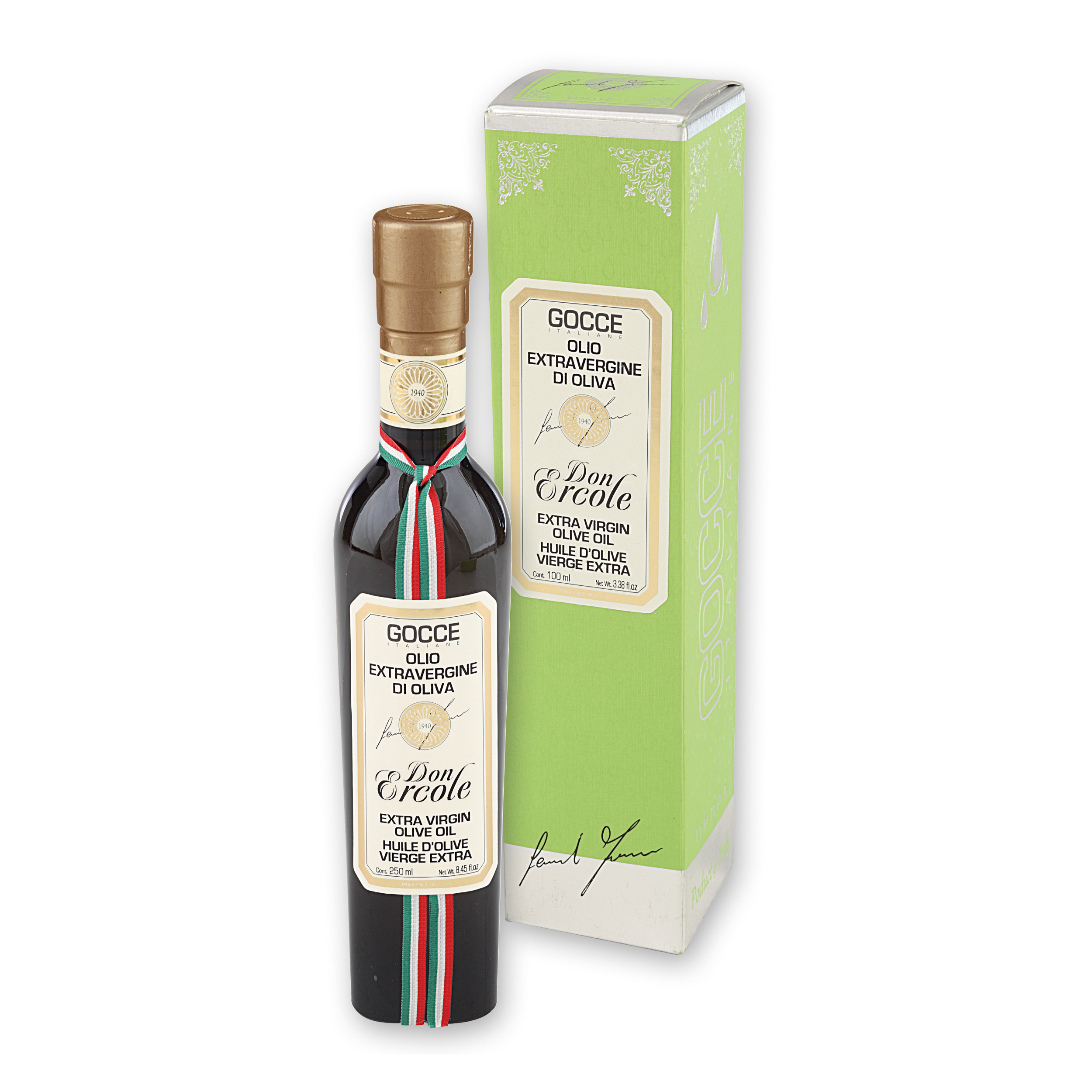
Sicilian extra virgin olive oil, cold-pressed within six hours of harvest and unfiltered. Intense and fruity with the almond finish typical of Sicilian olives. Three litres in a light-proof tin — our best value per millilitre, and the size to buy if you cook with olive oil rather than merely own some.
Origin: Sicily
Pressing: Cold-pressed within 6 hours of harvest, first press
Style: Unfiltered, rich in antioxidants, no additives
Size: 0.25 litres (250 ml) tin
How to use it
An everyday oil good enough to finish with. Pasta, dipping bread, grilled vegetables, roasting, dressings. The tin keeps light out, which is what actually degrades olive oil.
Why it's different
Speed is the whole story with olive oil. Most supermarket oil is pressed days after picking, by which time oxidation has begun and the polyphenols are fading. Six hours is what keeps the pepper in the back of your throat.
Who are We and Why Should You Care…
We are three close friends who have worked together for more than a decade. One of us lives in Italy. The other two are here in Nashville. Fratelli del Vino exists because we wanted to bring things over directly from the source, and to work only with family-owned producers who refuse to trade quality for volume.
That has been the philosophy since the first shipment, and we have no intention of changing it. It keeps us small, but it also means we answer to no one but ourselves and our own standards. There's no board asking us to hit a number and no buyer telling us to go find something cheaper. When our name goes on a bottle, that is the approval process.
So if you've had enough already and you're willing to take our word for it and, you're just here looking for an olive oil that is genuinely what it claims to be here it is, our shameless plug. Go ahead You found the right one, but we'd encourage you to read the rest.
Understanding what's being done to this industry is the part that stays with you, and it changes how you shop for everything. Know your product, know your source, and you start to actually appreciate what you're eating. It's also a useful reminder that nearly everything sitting on a grocery store shelf took a long time to get there and passed through a lot of hands on the way, and it is not always what we hoped it would be.
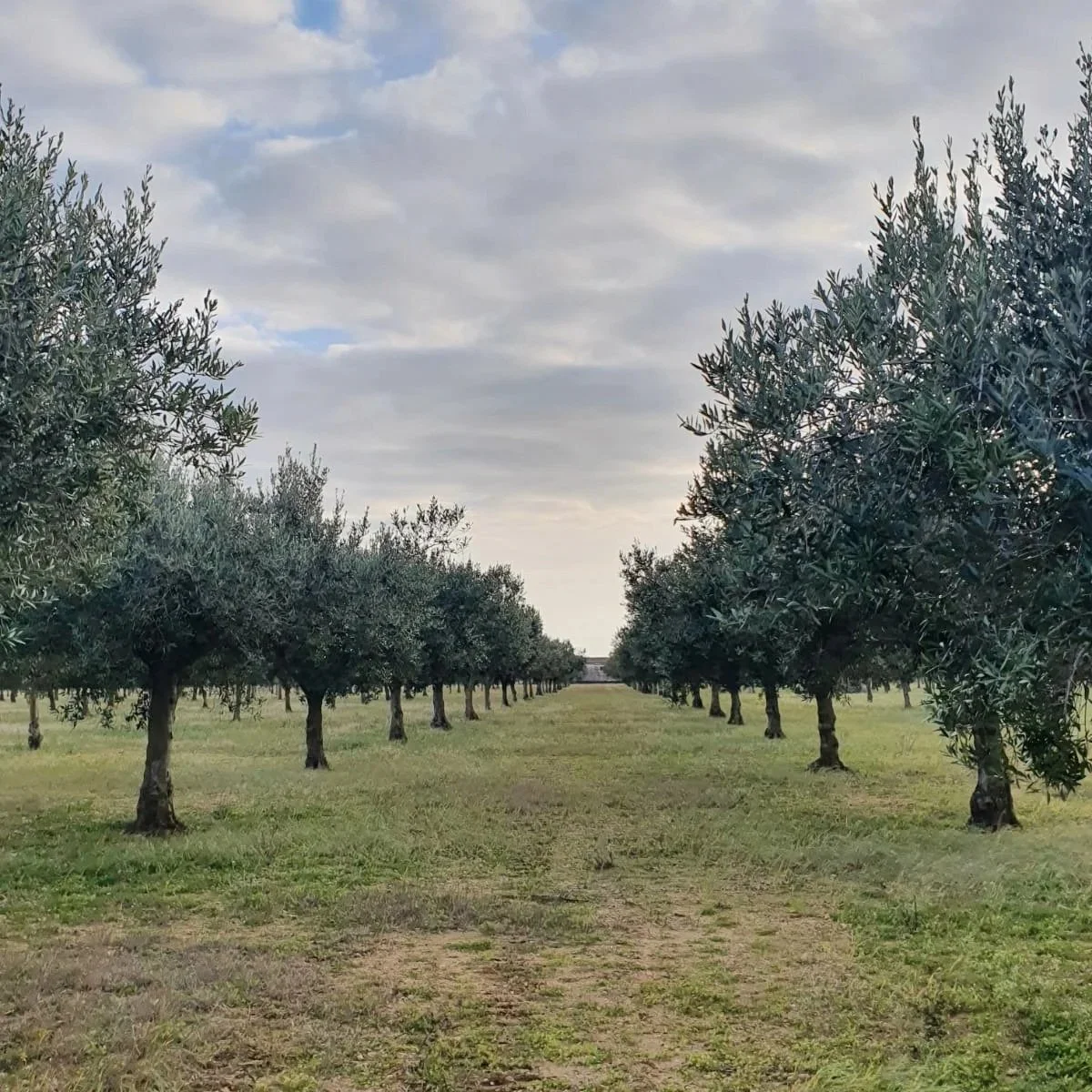
The estate of Baglio Vento located near Sciacca in Sicily
Start With the Math, Because the Math Doesn't Work
The International Olive Council put global olive oil production for the 2025/26 crop year at roughly 3.44 million tonnes, against world consumption of about 3.25 million tonnes. That is a tight number. There is not a lot of slack in the olive supply, and there never has been.
Now look at Italy specifically, since that's the flag on most of the bottles you're looking at. Italy's own harvest runs somewhere around 250,000 to 300,000 tonnes in a normal year. Italian domestic demand alone is roughly double that, before you count a single bottle destined for export. Italy imported 446,000 tonnes of olive oil in 2024 more than it grew.
Italy is a net importer of olive oil. It has been for decades. A great deal of what leaves Italy in a bottle arrived in Italy on a ship. Meaning to keep up with demand for “Italian olive oil” much is imported from neighboring countries into Italy and then bottled and labeled as “Italian.”
None of that is illegal or even secret. It's just structurally incompatible with the picture on the front of the bottle, the stone farmhouse, the cypress trees, the nonna. There are not enough Italian olives in the world for every bottle with an Italian name on it to contain Italian olives.
Then price. Bulk extra virgin olive oil out of Spain has been trading in the neighborhood of €4.00 - €4.60 per kilogram through 2026. Convert that, and you're already at roughly $4.00 - $5.00 dollars a liter for the raw commodity before bottling, before the boat, before tariffs, before the importer, before the distributor, before the retailer's margin. Consider that around 95% of the olive oil consumed in the United States is imported.
So when you see a liter of "extra virgin olive oil" on an endcap for $8.99, one of a few things has to be true. It's very old. It's not really extra virgin. It's been cut with something. Or somebody in the chain is losing money on purpose.
What Actually Happens to That Oil Before It Reaches You
Let’s follow a liter of commodity oil through the supply chain. The olives get harvested somewhere: Morocco, Spain, Tunisia, Greece, Turkey, Morocco, Portugal. All Different countries with, different growers, different harvest months, different cultivars, and sometimes different continents. On the industrial end of the business, olives may sit for days between picking and milling. Fermentation starts within hours of a fruit coming off the tree. Every hour it waits, the oil gets a little further from "fresh juice" and a little closer to "fusty."
The oil then goes into bulk tankers, totes, or holding tanks. It moves and it waits. Months can go by, sometimes most of a year, between the mill and the bottling line. During that entire time the oil is oxidizing, and its polyphenols, the antioxidants that give real olive oil its bite and its shelf stability, are being consumed defending it.
Eventually it arrives at one enormous facility, where oils from many origins are blended into a single homogeneous product with a consistent flavor profile. Which is the whole point: the commodity brand's promise is not "this tastes like Sicily in November." The promise is "this tastes the same in April as it did last August." Consistency is engineered by blending away character. And then there's the part almost nobody outside the trade knows about.
The Deodorizing Trick
If you have a batch of olive oil with sensory defects (rancid, fusty, musty, muddy) you have a problem. It won't pass a taste panel. You can't sell it as extra virgin.
But there's a workaround. It's called mild deodorization, or soft-column refining. Instead of the full industrial refining process at 180–250°C, which leaves obvious chemical fingerprints, you strip the oil at low temperature with a vacuum and an inert gas. It's gentle enough that it doesn't create the usual markers of refining. What it does is remove the volatile compounds, which is to say, it removes the smell and taste of the defect. The oil is still stale. It just doesn't smell stale anymore. Then you blend it back into decent oil, and the result passes.
Two things to understand about this. First, under International Olive Council rules, an oil that has been soft-deodorized is no longer legally "virgin." Doing this and selling the result as extra virgin is fraud. Second, the standard chemistry tests everyone runs, free acidity and peroxide value, often don't catch it. Detecting it takes specialist markers like pyropheophytins, diacylglycerols, and fatty acid alkyl esters, which the labs in Germany and Australia have been using for years and which are not part of routine US quality control. Which means an oil can pass every test on your certificate of analysis and still be a laundered defect.
"Extra Virgin" Is Doing Less Work Than You Think
Here's the thing most American shoppers assume: that "extra virgin" is a regulated, enforced, verified claim in the United States. It isn't, really. The USDA has grade standards for olive oil, updated in 2010 and closely aligned with international standards. They are voluntary. A producer can seek USDA grading if they want to; most don't. There is no mandatory federal standard of identity for olive oil grades. The industry itself, including the world's largest olive oil company and the main US importers' association, has been petitioning the FDA to create one. As of this writing, the FDA still lists that petition as under review. It has been under review since 2022. Earlier versions of the same request date back to 1990.
Meanwhile, the US does not systematically test imported olive oil against extra virgin standards at the border. Shipments get flagged and detained, but nobody is verifying the grade of every container that lands. So what happens in that vacuum? Researchers went and looked.
The UC Davis Olive Center ran two rounds of retail testing in California. In the first report, 69% of imported oils labeled extra virgin failed the International Olive Council sensory standard. In the follow-up, 73% of samples from the five top-selling imported brands failed, judged by two separate IOC-accredited taste panels, blind. The defects were rancid, fusty, musty. Some samples were so far gone that panelists graded them as lamp oil.
Those studies are from 2010 and 2011 and were partly funded by California producers, and the importers' association has disputed them ever since. Fair enough. So look at what enforcement agencies have found more recently:
Operation Omegabad, 2023. Spanish and Italian investigators, supported by Europol, seized more than 260,000 liters of oil and made 11 arrests. Lampante oil, the grade legally unfit for human consumption without refining, was being diluted into product sold as virgin and extra virgin, with falsified documents.
Italy, 2024. Italian authorities ran more than 8,200 olive oil inspections. Roughly 23% of samples showed irregularities. Investigators in Umbria found EU-origin oil passed off as Italian and seed oils blended into product sold as premium extra virgin. In Tuscany, counterfeit extra virgin made from seed oil and pomace, colored with chlorophyll and beta-carotene. In Campania, 8,000 liters adulterated with sunflower oil and synthetic colorants.
Europe-wide. Edible oils are consistently one of the most frequently adulterated food categories identified by the joint Europol–Interpol OPSON operations.
To be clear about the seed oil question, since it comes up constantly: cutting olive oil with sunflower or soybean oil and calling it extra virgin is a crime, not a labeling loophole. But it happens, the seizures above are proof, it is the exception, not the rule. What's far more common, and completely legal, is that the oil is just old, blended from everywhere, and deodorized into blandness.
About That "Organic" Badge
Organic certification is a real thing and it means something. It means the olives were farmed without prohibited synthetic pesticides and fertilizers, with an audit trail behind it.
Here's everything organic certification does not tell you:
How long ago those olives were harvested
How many hours passed between picking and milling
Whether the oil is actually still extra virgin grade by the time you buy it
Which countries it came from
Whether it's been sitting in bulk storage for eleven months
Whether it tastes like anything at all
Organic is an agricultural claim. It is not a freshness claim, a grade claim, or a flavor claim. A ten-month-old blend of oils from four countries can be certified organic and still be flat, tired oil. The word on the front of the bottle is doing exactly the job it was put there to do: making you feel finished with your research.
The Clear Plastic Bottle Is Not an Accident
Olive oil has three enemies: light, heat, and oxygen. Clear plastic is vulnerable to all three. Glass is impermeable to oxygen. Every food-grade plastic is not. In storage studies, oil in PET bottles (plastic commonly used in disposable water bottles) has crossed the legal peroxide threshold for extra virgin classification while identical oil in dark glass stayed comfortably under it. Research on packaging materials consistently ranks tin and dark glass at the top and clear containers at the bottom clear PET and clear glass have been described outright as unsuitable for olive oil. On top of oxygen permeability, there's the ongoing question of microplastics or plasticizer migration from the container into a fatty product over months of contact.
And then light. Chlorophyll in olive oil is a photosensitizer and under fluorescent supermarket lighting, it actively accelerates the oil's own destruction. One frequently cited figure: oil in clear glass under fluorescent light lost 40% of its polyphenols in two months.
So why is it in clear plastic? Because plastic is cheap, it doesn't break in a shopping cart, and — this is the important one, shoppers like to see the oil. The industry knows this. Packaging researchers have documented it. The clear bottle is a merchandising decision made at the direct expense of the product inside it.
Which brings us to what you're seeing through that clear bottle: pale, uniform, water-clear yellow oil with nothing moving in it. Now, fair warning, because this is where a lot of well-meaning olive oil advice goes wrong: color by itself is not a reliable quality indicator. Professional tasters evaluate oil from cobalt blue glasses specifically so color can't bias them. Good oil comes in everything from vivid green to pale gold, depending on cultivar and harvest timing. But the combination is the tell. Pale, perfectly clear, perfectly consistent, in a clear plastic jug, with no aroma when you open it and no pepper when you taste it? That's not a style choice. That's a product engineered to have nothing left to lose.
They're Betting You Won't Turn the Bottle Around
The front of the bottle is a painting. The back of the bottle is a document. Everything they're required to tell you is on the back, in six-point type, and the entire business model assumes you won't read it.
So read it, and here is the checklist.
🚩 Red flags on the back label (what to be cautious of)
Multiple countries of origin. Look for the origin designation. Under EU rules, extra virgin and virgin olive oil sold in the EU must carry one and if it's a blend, it has to say so, in one of a few standardized forms: "blend of olive oils of European Union origin," "blend of olive oils not of European Union origin," or "blend of olive oils of European Union origin and not of European Union origin." That last one means: this came from inside and outside Europe and we're not telling you where. Any of these means you're holding a blend of unknown farms from unknown seasons.
A "best by" date with no harvest date. This is the single biggest one. A best-by date is calculated backward from bottling and bottling can happen a year or more after the harvest. It tells you when the company stops standing behind the product, not when the olives came off the tree. Olive oil is fresh produce that happens to be shelf-stable. The harvest date is the only date that means anything. Its absence is a choice.
Vague Italian atmosphere in place of specifics. "Imported from Italy." "Packed in Italy." "Bottled in Italy." "Mediterranean blend." "Product of the EU." An Italian-sounding brand name on an oil that never met an Italian olive. None of these are origin claims,they're set dressing.
Clear plastic, or clear glass. Covered above.
A price that's too good to be true. Given where bulk commodity oil trades, genuine, fresh, well-made extra virgin has a floor, and that floor is well above the promotional endcap. Of every signal on this list, an implausibly low price is the most reliable one.
No producer, no estate, no mill. If nobody's name is on it, nobody's accountable for it.
✅ Green flags on a good label (what you want to see)
A harvest date. Ideally the current or most recent crop year.
A named place, narrower than a country. A region. Better: an estate. Better still: a single estate that grows, mills, and bottles on the same property, which means one terroir, one season, one chain of custody.
Named cultivars. A real producer will tell you which olives are in the bottle, because the varieties are the flavor. If a label can't name the olives, it's because the answer changes by the tanker load.
Dark glass or tin. Tin is the best of the lot — total light exclusion, and it doesn't break.
Time from harvest to press, stated in hours. The good ones brag about this, because it's the hardest thing to fake and the most expensive thing to do.
DOP or IGP certification, where applicable, third-party verification tied to a specific place rather than a marketing department.
What We Import, and Why It's Built the Opposite Way
We didn't set out to sell olive oil. We set out to import things from Italy we'd be happy to put on our own table, and for a long time we couldn't find an oil that cleared the bar. Then we found Gocce Italiane. Here is every specific we'd want to read on a label, applied to the oil we actually sell.
One dot on the map: Sciacca, in the province of Agrigento
Not "Italy." Not "Sicily," even. Sciacca — a fishing town on the southwestern coast of Sicily, in the Agrigento valley. The estate is called Baglio Vento, and it is the single origin of every drop in the tin.
Two facts about that patch of ground do real work in the glass: The soil is heavy in limestone. The producer credits it directly for the oil's density and body — the way it coats a piece of bread instead of running off it.
The groves sit less than two kilometers from the sea. That matters because of the wind. A cold north wind runs down over the estate, and the growers time their picking to it: they harvest while that wind is blowing, on the reasoning that the cool, dry air keeps the fruit tight and intact right up to the moment it goes to the mill. You will not find that sentence on a supermarket label, because a supermarket blend has no moment. It has a purchase order.
2,500 mature trees, and some that were old before America existed
The historic grove holds more than 2,500 olive trees over forty years old, alongside olivi secolari, trees over four hundred years old, still producing. A newer planting has added 1,500 more Cerasuola trees and 450 orange trees.
Old trees yield less per acre than young ones. They also produce more concentrated, more structured oil. Keeping four-hundred-year-old trees in production is a decision about quality made at the expense of volume, which is more or less the definition of the thing the commodity model cannot do.
Four named Sicilian olives — and what each one contributes
This is the part a commodity label can never print. The blend is built from four native Sicilian cultivars, all on the Sicilia IGP register:
Cerasuola — the backbone. Intense, fruity, with pronounced pungency. It's the variety being expanded in the new grove, and it's where most of the peppery finish comes from.
Nocellara del Belice — western Sicily's most famous cultivar, widely rated among the best olives in the world. Medium-intense fruitiness with fresh grass, artichoke, and almond, and a balanced bitter-to-spicy structure. It's the diplomat in the blend.
Biancolilla — a native Sicilian variety with a deliberately delicate character: floral, grassy, ripe fruit, light bitterness. It's what keeps the oil from becoming a blunt instrument.
Tonda Iblea — eastern Sicily's signature olive, all green tomato and almond with a long, persistent pungency. It's why the finish doesn't quit.
November, by hand, onto nets
The harvest happens in November, worked by hand crews tree by tree, shaking the fruit down onto nets spread beneath the canopy. No straddle harvesters. No stripping the grove in a week because the contract says so. Picked at the moment the wind and the fruit agree.
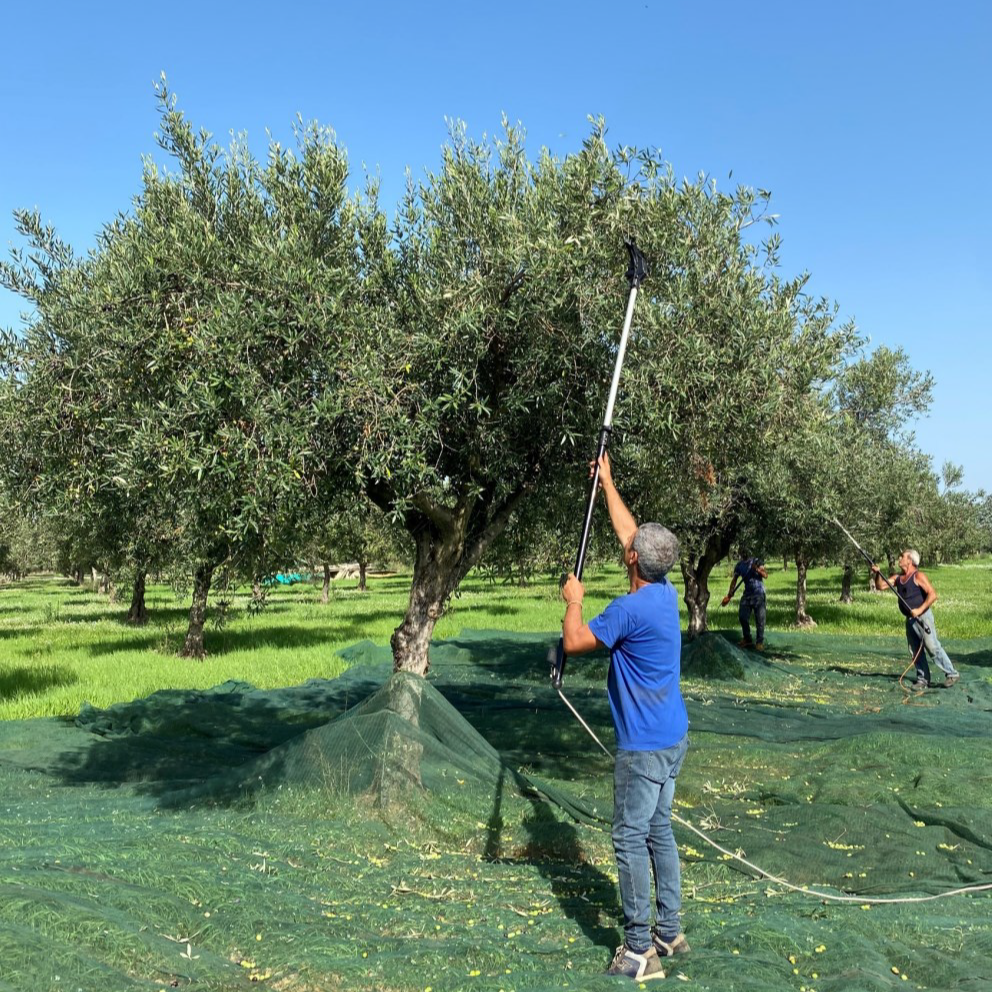
Manual Harvesting at the Gocce Estate in Sicily
Six hours from tree to mill
The olives are washed in water and then pressed within six hours of harvest. Not six days. Six hours.
This is the single most expensive commitment on this page, and the most consequential. Fermentation and acidity begin building the moment a fruit leaves the branch, and there is no way to reverse it later — every defect the industry removes by deodorizing is a defect that starts in the gap between picking and pressing. Six hours is aggressive even by serious-producer standards; plenty of excellent estates target twenty-four. For scale, the Sicilia IGP rules require milling within forty-eight hours. This oil is at the mill before the clock has run an eighth of that.
Two phases, not three — the detail nobody advertises
Here is the technical decision that separates good oil from very good oil, and almost no one puts it in marketing copy. Most mills separate oil from paste in a horizontal centrifuge called a decanter. A three-phase decanter adds warm water to the paste to make separation easier — commonly 20–30% of the paste's weight. It works, it's forgiving, and it increases yield. It also washes polyphenols out of the oil, because polyphenols are water-soluble. The published estimates for that loss run around 15–25%.
Gocce runs a two-phase decanter: oil and wet pomace, no added water at all. Nothing dilutes and nothing rinses away. The polyphenols stay in the oil, which is why the producer describes the result as richer in polyphenols with heightened bitter and spicy aromas.
Those aren't flaws. Bitterness and pungency are officially positive attributes in olive oil grading, and they are the taste of the antioxidants still being present. The two-phase system is harder to run and less forgiving on yield. It is a choice to make less oil that is worth more.
Never above 27°C
Through crushing, decanting, and the vertical centrifuge that follows, the temperature is held so it never exceeds 27°C (80°F). That threshold is the actual legal and practical meaning of "cold extracted," and it's the line above which the volatile aromatic compounds — the grass, the tomato leaf, the artichoke — start cooking off. Heat raises yield. It costs you the smell.
A few days of settling, then nitrogen
After extraction the oil rests for several days of natural settling, then gets filtered for clarity and stability without stripping character. Then it goes into stainless steel under nitrogen, at constant temperature, until bottling. Nitrogen blanketing means the headspace above the oil is filled with inert gas instead of air, so there is effectively no oxygen touching the oil during storage. Everything you read above about oxidation, the polyphenol loss, the slide toward rancid, the whole reason commodity oil arrives tired, is an oxygen story. This estate spends money to make sure that story never starts.
What it actually tastes like
Intense green in the glass. The aroma is fruity, of olives just picked, with a light herbaceous tone and clear notes of green tomato and artichoke. It finishes on almond, with a light spicy catch. That catch is oleocanthal, a polyphenol, and the single most reliable sign in the world that you're holding real, fresh, unrefined olive oil. Some people cough the first time. It's also the exact sensation the commodity supply chain spends millions of dollars removing.
Use it for anything: raw or cooked vegetables, potatoes, vinaigrettes, dipping, sauces, soup, pasta, rice, roasted and grilled meat, fish, cheese, cured meats, pizza, garlic bread. It is not a finishing-only oil. Cook with it, then finish the plate with it!
And it comes in a tin
500ml, in tin, for $30. No light, no oxygen permeation, no plastic. Which, if you've read this far, should now register as a completely ordinary price for a product made this way, and should make the $8.99 liter look like a scam.
Frequently Asked Questions
How can I find affordable olive oil that I know is real? Find a Product you Like and buy in bulk. Even though we own this import company this is what we do. Try our 3 liter tin of the same quality oil (a gallon is 3.8 liters). You spend more up front but you pay 50% less by volume! We uses these to refill smaller containers that sit on our counters at home.
Is grocery store olive oil fake? Impossible to say, but usually they are just old and of super low quality. The common problems are legal ones: oil blended from several countries, held in bulk for months, and bottled with a "best by" date that hides how long ago the olives were picked. Outright adulteration with seed oils does happen and gets prosecuted in Europe, but it's the exception. The rule is oil that has simply lost everything that made it worth buying.
How can I tell if olive oil is real extra virgin? There's no reliable home test. The refrigerator test is a myth, and color proves nothing. Use the label and your senses. On the label: a harvest date, a specific estate or town, named olive varieties, and dark glass or tin. In the glass: it should smell like fresh green plant matter and produce a peppery catch at the back of your throat. No smell and no pepper means no polyphenols.
Why is good olive oil so expensive? Because there is no olive surplus anywhere in the world, and quality costs yield at every step. Milling within hours instead of days, two-phase extraction with no added water, capping temperature at 27°C, keeping four-hundred-year-old trees in production, storing under nitrogen, each of those decisions produces less oil, not more. Bulk commodity oil alone runs four to five dollars a liter before it's touched by anyone in the US supply chain.
Why does no harvest date appear on most supermarket bottles? Because it isn't required, and because the answer wouldn't help sell the bottle. A best-by date is calculated forward from bottling, and bottling can happen many months after harvest. Producers who mill their own fruit print the harvest date because it's their best argument.
Does olive oil in plastic go bad faster? Yes! Glass and tin are impermeable to oxygen; food plastics are not, and clear containers also let in the light that drives oxidation. In storage trials, oil in PET has crossed the peroxide limit for extra virgin classification while the same oil in dark glass stayed well under it.
Can you cook with extra virgin olive oil? Yes, and it's one of the most heat-stable choices you have. In laboratory testing of ten common cooking oils, extra virgin olive oil produced the lowest levels of oxidative breakdown products, better than canola, sunflower, and grapeseed, all of which have higher smoke points. Smoke point turns out to be a poor predictor of how an oil actually behaves in a pan.
The Bottom Line
The grocery store didn't ruin olive oil by selling you a counterfeit. It ruined olive oil by selling you the real thing, aged past the point of meaning, blended past the point of identity, deodorized past the point of memory, and then teaching you that that was the flavor of olive oil. It isn't. It's the flavor of a bloated and expansive supply chain.
Somewhere in Sciacca there are trees that were old when Sicily was ruled by Spain, picked by hand in November when the north wind comes down off the island, and at the mill inside of six hours. That's what olive oil tastes like. Turn the bottle over. Look for a date and a place. If it can't give you both, it's already told you everything you need to know.
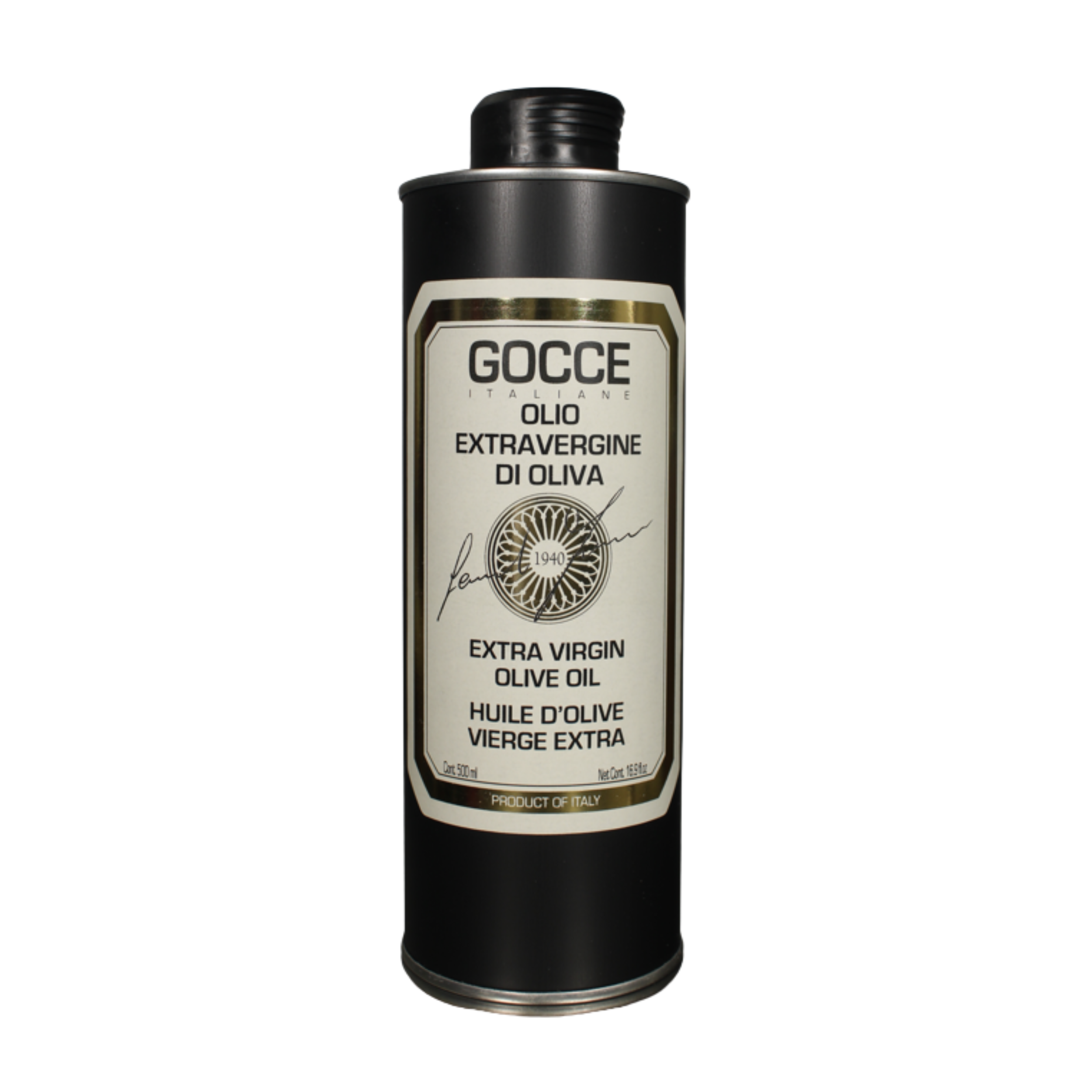
Sicilian extra virgin olive oil, cold-pressed within six hours of harvest and unfiltered. Intense and fruity with the almond finish typical of Sicilian olives. Three litres in a light-proof tin — our best value per millilitre, and the size to buy if you cook with olive oil rather than merely own some.
Origin: Sicily
Pressing: Cold-pressed within 6 hours of harvest, first press
Style: Unfiltered, rich in antioxidants, no additives
Size: 0.5 litres (500 ml) tin
How to use it
An everyday oil good enough to finish with. Pasta, dipping bread, grilled vegetables, roasting, dressings. The tin keeps light out, which is what actually degrades olive oil.
Why it's different
Speed is the whole story with olive oil. Most supermarket oil is pressed days after picking, by which time oxidation has begun and the polyphenols are fading. Six hours is what keeps the pepper in the back of your throat.
Fratelli del Vino is a Nashville-based importer of Italian wine, balsamic vinegar, and Sicilian olive oil. Shop Gocce Italiane Extra Virgin Olive Oil →
