Saba vs Balsamic Vinegar: What's the Difference?
If you've ever picked up a bottle of saba and wondered whether it's just a weird flavor of balsamic vinegar then here's the short answer: saba is what balsamic vinegar is before it becomes vinegar.
Same grapes. Same first step. Then the paths split, but one of them never turns sour.
What saba actually is
Saba is cooked grape must. Grape must is just freshly crushed grape juice. That's it, and that's the whole ingredient list.
At Gocce, the family we import from in Modena, the must comes from Trebbiano and Lambrusco grapes grown on their own land. It's pressed, then simmered gently for more than 36 hours until the water cooks off and what's left is thick, dark, and concentrated, somewhere between maple syrup and molasses in body, but tasting distinctly of grape.
You'll also see it called mosto cotto or sapa depending on which part of Italy you're in. Same thing.
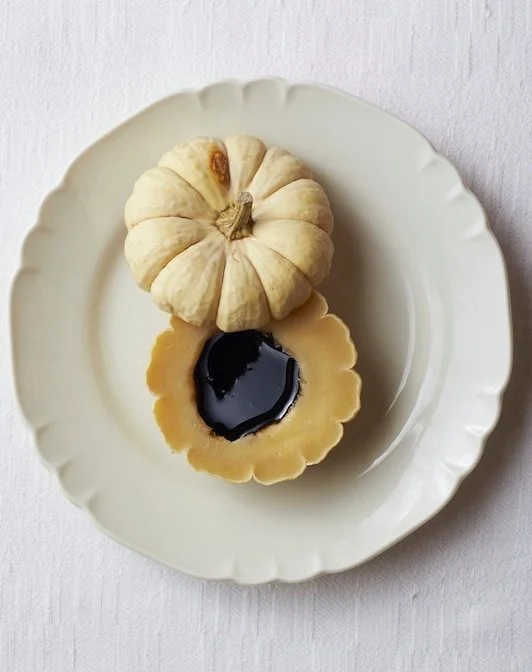
Baked Pumpkin Filled with Saba
Where balsamic diverges
Traditional balsamic vinegar starts in precisely the same place: cooked grape must from the same varieties, often from the same harvest.
The difference is what happens next. Balsamic goes into a battery of wooden barrels and undergoes acetification, which is a controlled fermentation that turns some of those sugars into acetic acid. Then it sits. Twelve years minimum for DOP. Twenty-five for Extravecchio. Every year it moves to a smaller barrel of a different wood, and every year a little more evaporates.
Saba skips all of it. It's bottled after cooking, sweet and un-soured.
That's why saba costs $19 and a bottle of 30-year Extravecchio runs $135. You're not paying for better grapes. You're paying for three decades of patience and evaporation.
Side by side
Saba vs Traditional Balsamic: Side by Side
| Saba | Traditional Balsamic (DOP) | |
|---|---|---|
| Made from | Cooked grape must | Cooked grape must |
| Fermented into vinegar? | No | Yes |
| Aged in barrels? | No — bottled after cooking | Yes — 12 to 25+ years |
| Flavor | Sweet, fruity, and grapey. Thick like syrup. | Sweet and tangy, with notes of chocolate, umami, and oak. Light acidity — deeply complex and balanced. |
| Acidity | Very low | Pronounced |
| Use it like | Honey, maple syrup, or molasses — by the spoonful | A finishing drop, used sparingly |
| Price | $19 for 250ml | $90–$135 for 100ml |
| Shop Saba — $19 → | Shop Traditional DOP → |
Older than balsamic — and older than sugar
Saba predates balsamic vinegar by a long way. Before cane sugar reached Europe, reduced grape must was how much of the Mediterranean sweetened food. The Romans cooked it down and called it defrutum or sapa, used it in everything from sauces to preserved fruit, and wrote about it in their cookbooks. Farm families in Emilia-Romagna kept making it for the same practical reason for centuries afterward: grapes were what they had, and cooking the must was how you kept the sweetness through winter.
So when you drizzle saba on yogurt, you're using a sweetener that's been in continuous production for roughly two thousand years.
How to actually use it
This is where saba earns its place, because incredibly versatile. You use balsamic in drops. You use saba in spoonfuls.
On breakfast Pancakes, waffles, oatmeal, plain yogurt. It's the easiest swap in the house anywhere you'd reach for maple syrup, molasses, or honey, use saba instead. The flavor is less sweet and more interesting. Our personal favorite is on southern style biscuits with ham!
On cheese This is the one to try first. Saba over aged Parmigiano, ricotta, or a soft goat cheese is genuinely excellent, and it costs a fraction of what you'd spend finishing the same board with DOP balsamic. If you're building a cheese plate, saba does 80% of the work for 15% of the price.
On dessert Vanilla gelato. Strawberries. Cheesecake. Roasted figs or peaches. Anything where you want sweetness with some depth behind it.
In cooking Whisk into a pan sauce for pork or duck. Brush on roast turkey or chicken in the last few minutes. Stir into a bowl of roasted winter vegetables — squash and saba is a genuinely good combination.
In drinks A spoonful in sparkling water makes something close to a shrub, minus the pucker. It works in cocktails, and it sweetens herbal tea beautifully. If that appeals, our balsamic mocktail mixers run on the same idea.
Italian Summer Cola combine 2 tablespoons of saba, 6 ounces of chilled sparkling water, and a splash of fresh lemon juice over ice. This absolute classic is like trying “cola” if it were made from natural ingredients instead of chemicals in a lab. Try it once and you wont go back!
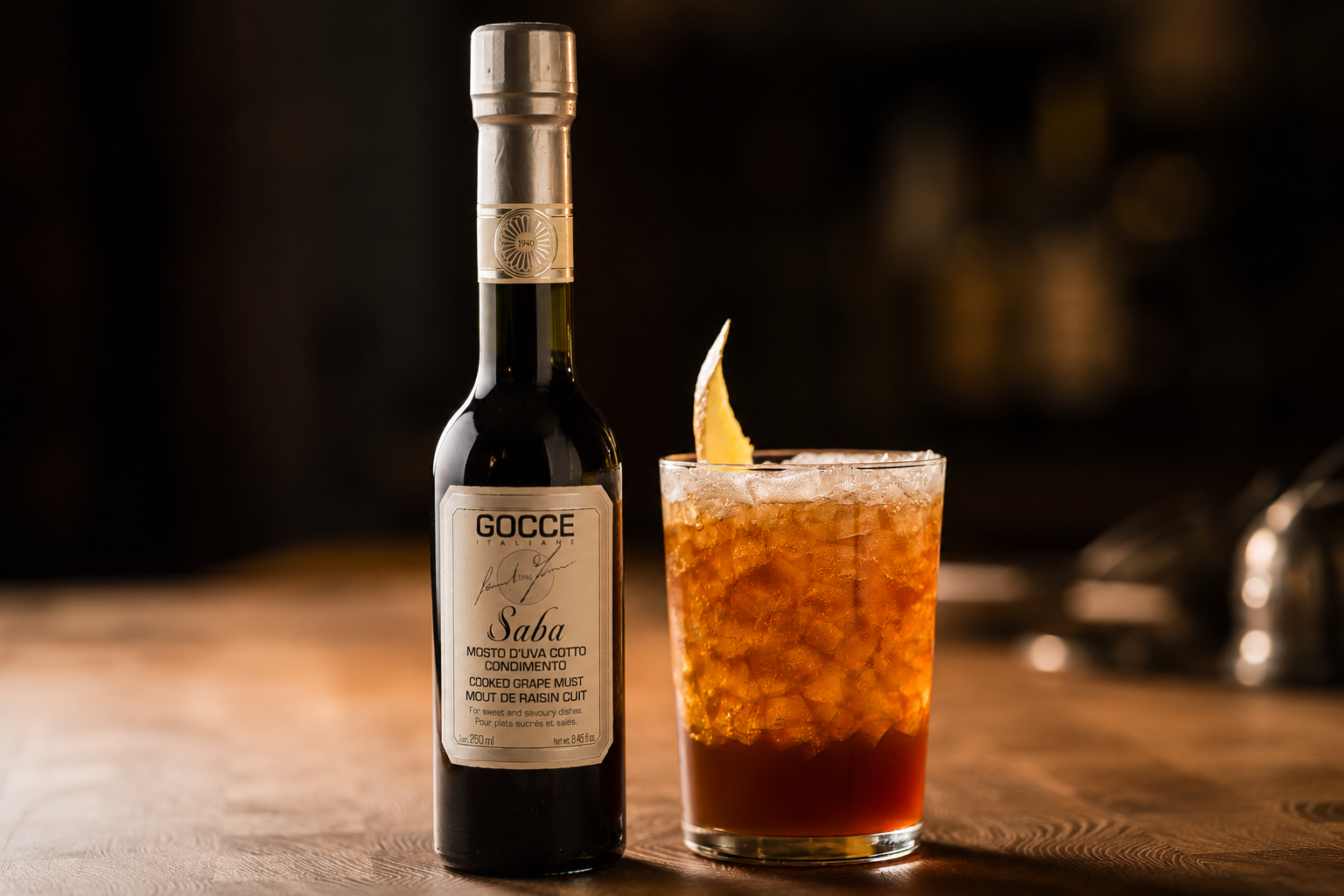
Italian Summer Cola: 2 tablespoons of saba, 6 ounces of chilled sparkling water, and a splash of fresh lemon juice over ice
No added sugar, and that's not marketing
This is worth stating plainly because so many bottles on American shelves can't: Gocce saba contains cooked grape must. Nothing else. No cane sugar, no glucose syrup, no caramel color, no thickeners, no preservatives. The sweetness is grape sugar, concentrated by evaporation. That's the entire process.
It's not a health food, it's a sweetener, and it should be treated like one. But if you're trying to move away from refined sugar without giving up flavor, saba is one of the more satisfying places to land.
How to store it
Cupboard is fine. No refrigeration needed, and it keeps for years unopened. Once opened, use it within a year or so for the best flavor. If it thickens up in a cold kitchen, stand the bottle in warm water for a minute.
Try it
Cooked grape must from Trebbiano and Lambrusco grapes, simmered over 36 hours in Modena. One ingredient. We import it directly from the Leonardi family, who have been making it on the same farm since 1871.
Also worth a look:
Balsamic Pearls, Classic — $20 — the textural counterpart to saba on a cheese board
6 Year Balsamic + Olive Oil pack — $50 — the easiest way to taste the difference between real and grocery-store balsamic
Traditional Balsamic DOP — where the same grape must ends up after 15 to 30 years in wood
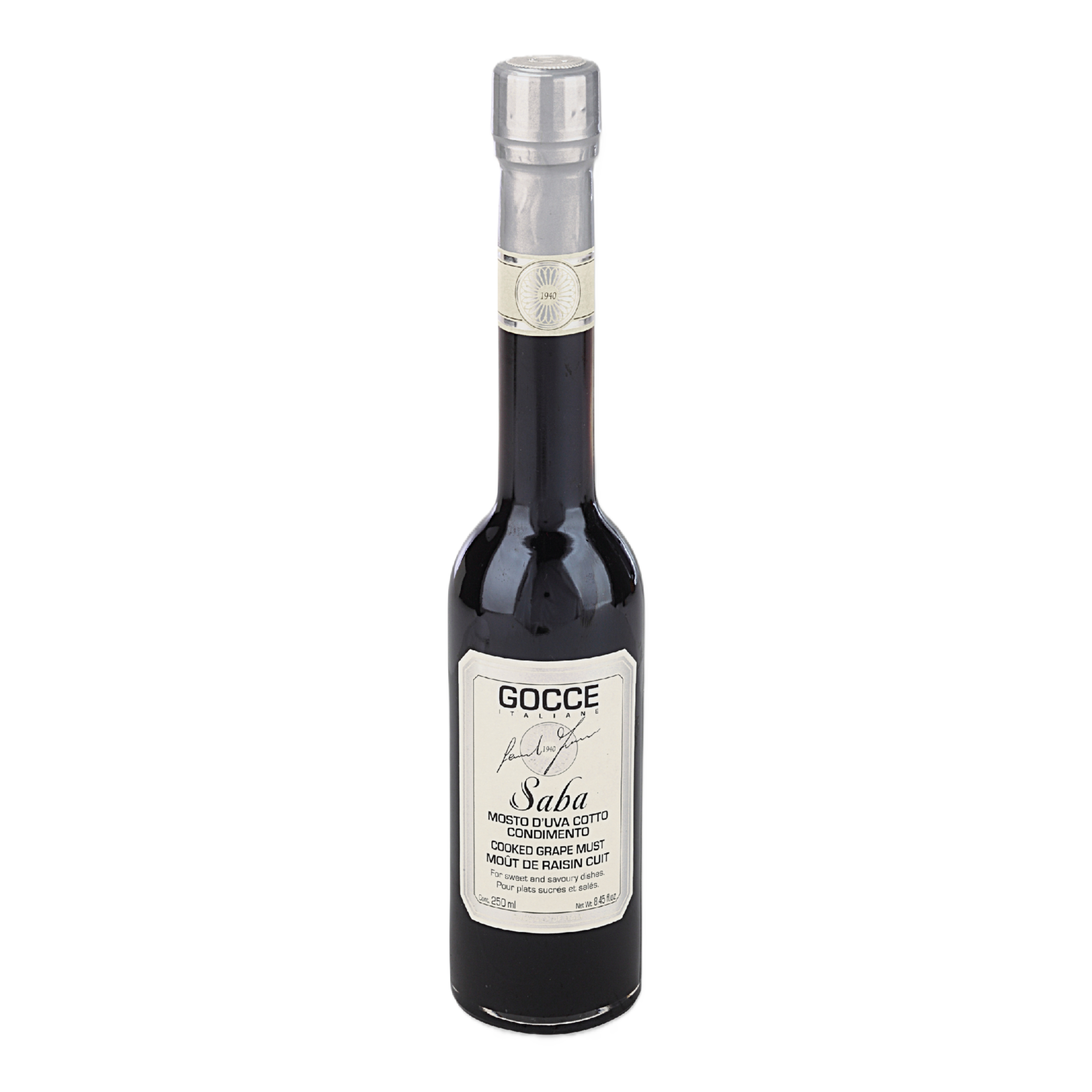
Saba is a natural sweetener produced from the slow cooking of Trebbiano and Lambrusco grapes’ must. It is excellent instead of sugar or honey to give a sweet touch to foods like rice, soup, cooked vegetables, roast turkey, soft or aged cheese, fruit salad, ice-cream, plain yogurt, cheesecake, strawberries, pancakes, waffles, oatmeal or even to make cocktails, sweeten herbal teas and beverages.
Size: 250 ml
Production: Grape must, mainly from Trebbiano and Lambrusco grapes, is cooked for over 36 hours in order to obtain a thick and fruity product.
